
Learn more about the symptoms of sleep and breathing issues.
When the breathing passages don't have enough space, the body has to work harder to do simple things - like breathe and sleep.
to learn more

Small signs. Big impact.
Early identification can support better breathing, better sleep and better growth.
Deep Bite
How deep bite connects to growth:
Signs like deep bite are often more than "just a phase." They reflect how a child is adapting during growth and can influence how the face, jaws, and teeth develop over time.
When the jaw doesn't develop to its full potential, it can lead to a cascade of functional issues. Our goal is to identify these patterns early and guide healthy development to resolve the root cause.
What happens during sleep?
Jaws shape breathing space
Limited jaw growth narrows the breathing space, causing mouth breathing and poor sleep quality.

Growth adaptation
Mouth breathing prevents proper tongue posture, resulting in crowded teeth and misaligned bites.

Oxygen & Focus
Reduced oxygen during deep sleep leads to fatigue, mood swings, and focus issues the next day.
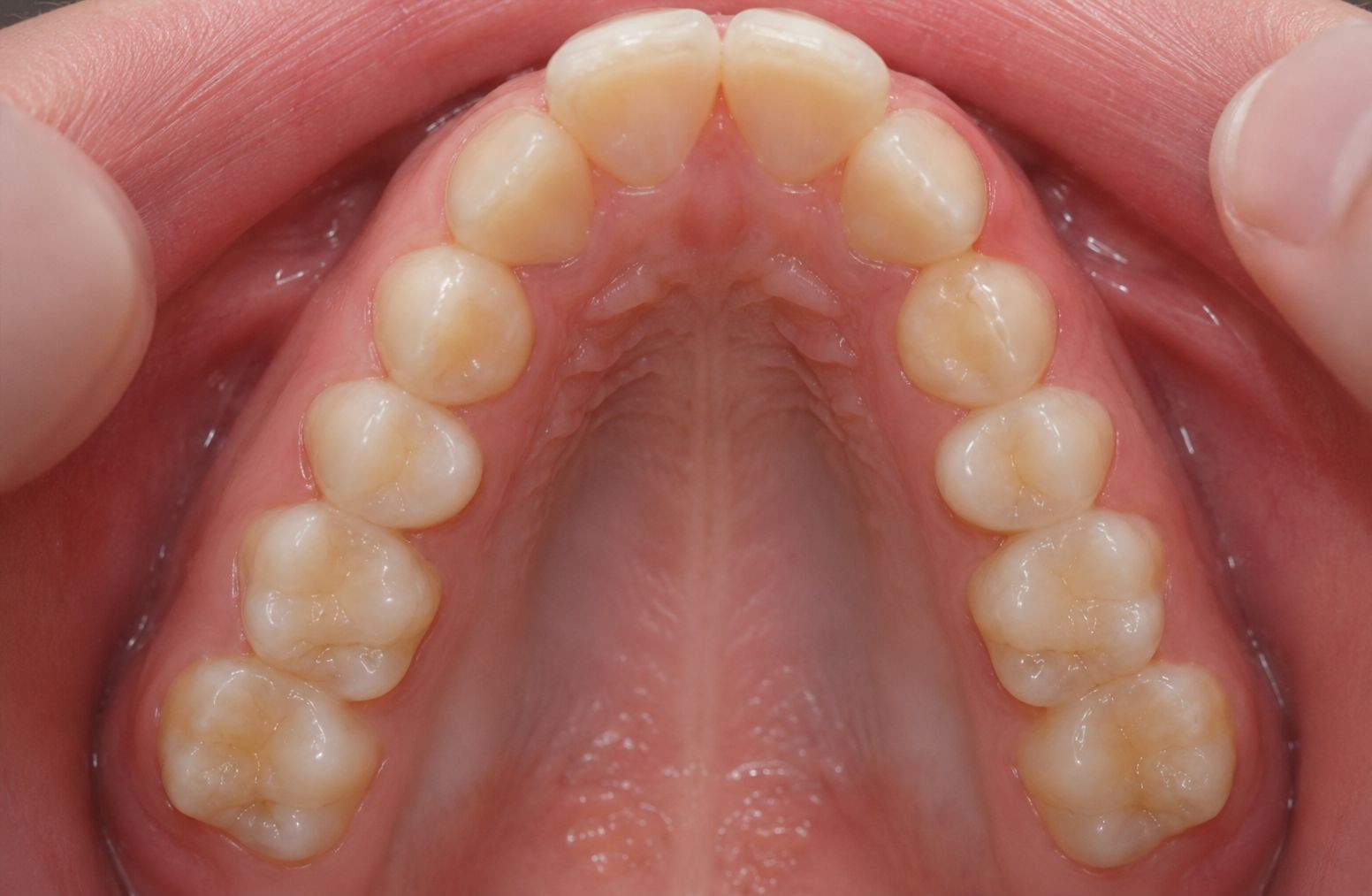
The roof of your child's mouth is also the floor of their nasal cavity.
Understanding the palate is key to understanding sleep and breathing health. A narrow or high palate directly reduces the space in the nasal passages, making nasal breathing difficult.


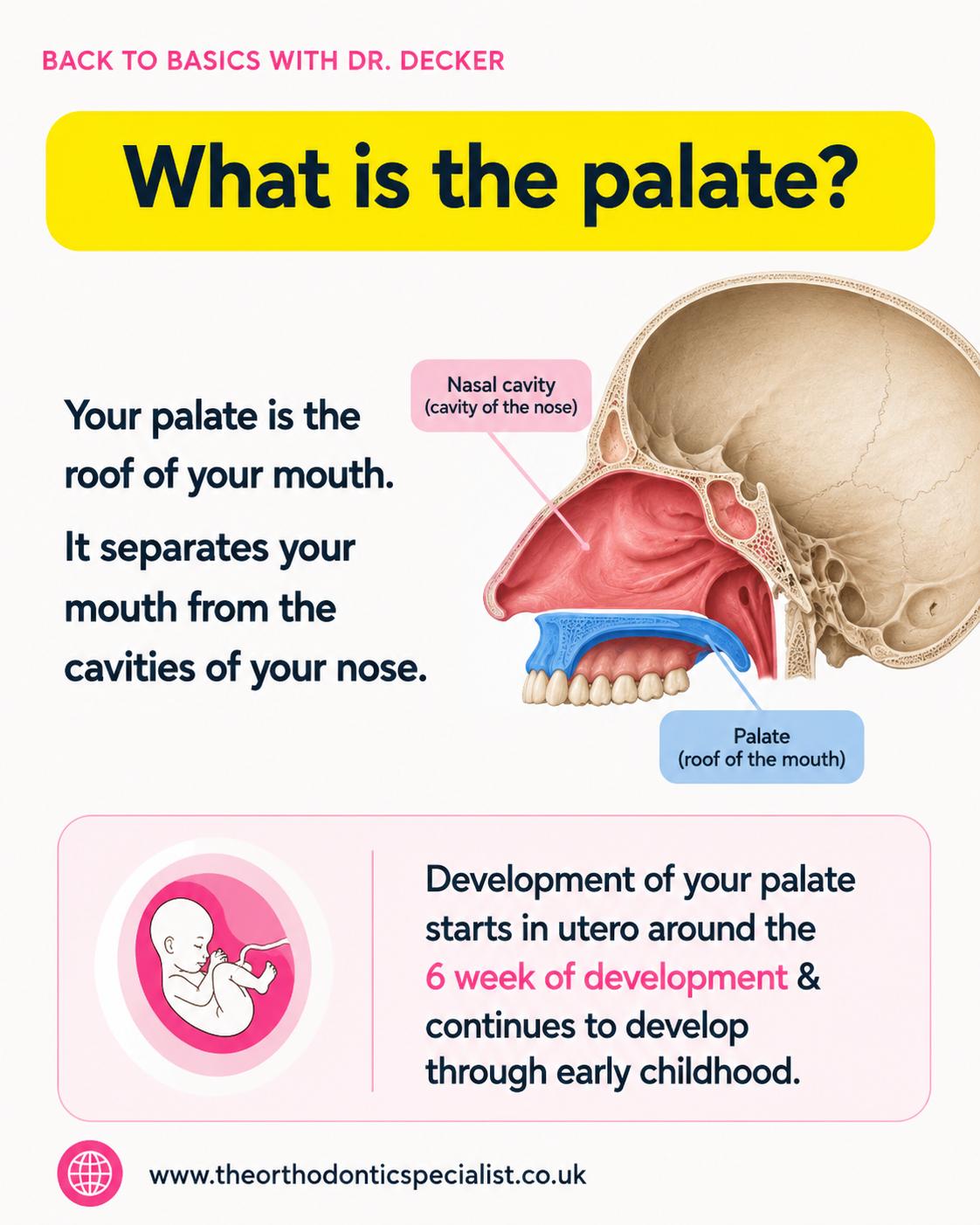
The Palate
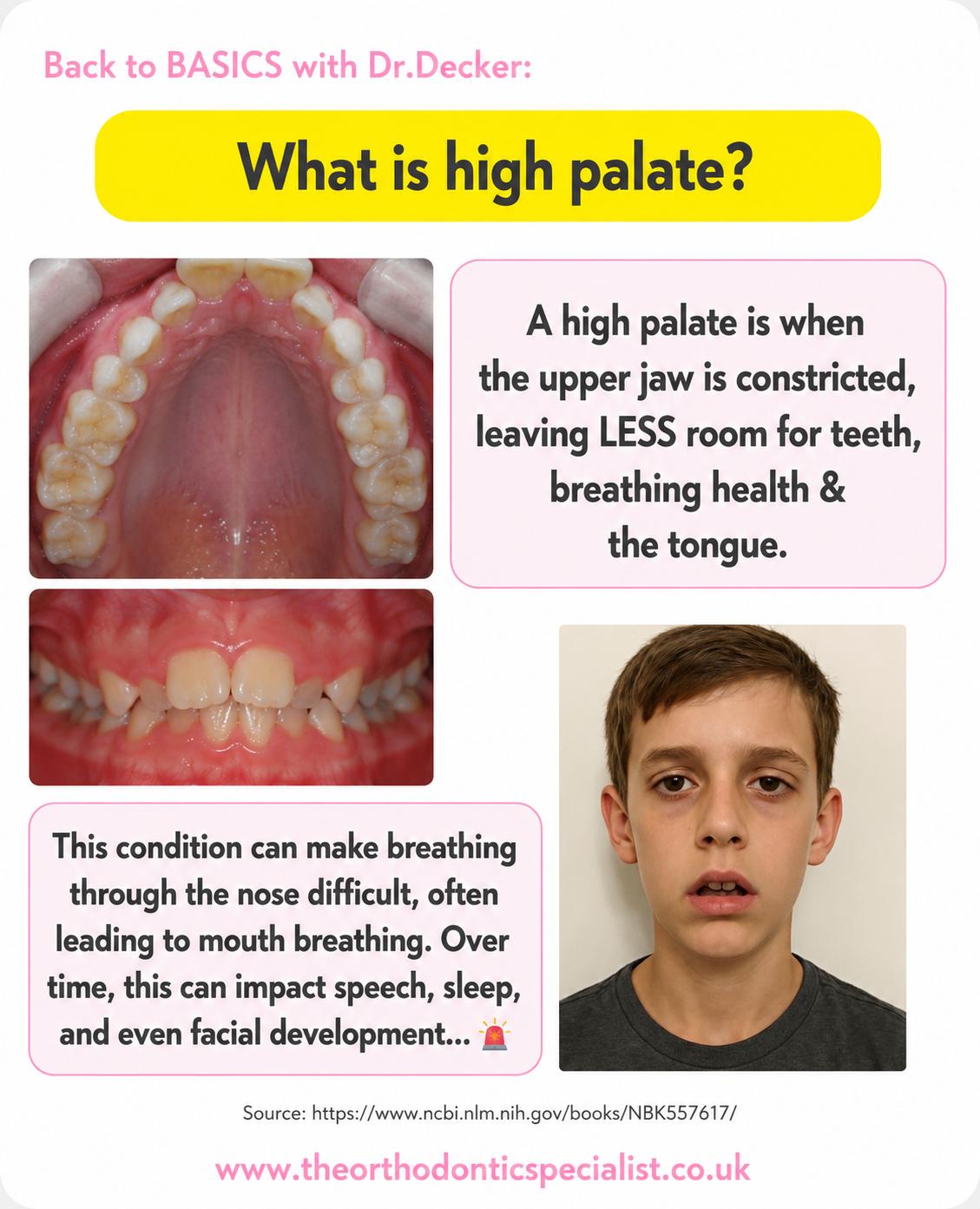
Palatal Architecture
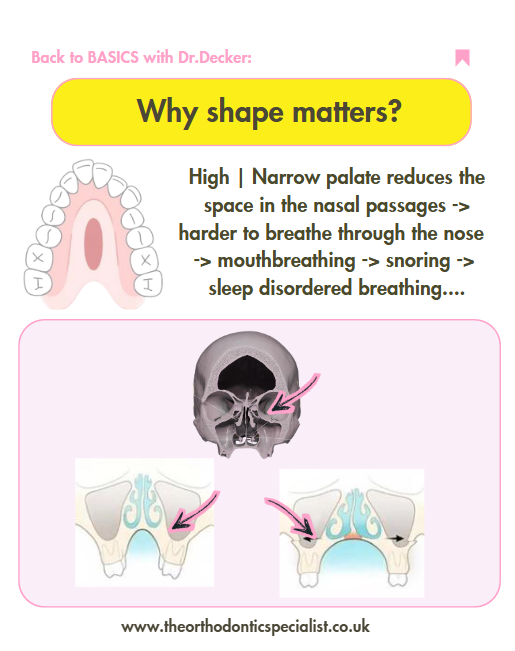
Breathing Impact
How should a child breathe?
Nasal Breathing
The Ideal Foundation
- ✓Filters, warms and humidifies air before it reaches the lungs
- ✓Allows the tongue to rest on the roof of the mouth, widening the jaw
- ✓Increases oxygen uptake and supports deep, restorative sleep
- ✓Releases nitric oxide, which helps dilate blood vessels and improve focus
Mouth Breathing
A Sign of Adaptation
- ✗Air is cold, dry and unfiltered, irritating the tonsils and adenoids
- ✗Forces the tongue down, causing the upper jaw to stay narrow and crowded
- ✗Leads to lighter, restless sleep and frequent night-time awakenings
- ✗Can contribute to long-term changes in facial growth and jaw structure
The Lifelong Dental Health Journey
Explore our interconnected ecosystem of prevention, diagnosis, treatment, rehabilitation, and education.
Childhood
"Prevent problems before they become lifelong conditions."
Guiding facial growth and addressing airway issues early to prevent lifelong conditions.
Key Focus Areas:
GrowIQ Dental Academy
Our educational backbone. Teaching clinicians how to deliver predictable, evidence-based care across the entire lifespan of dentistry. From student to faculty and future research innovation.