
How early growth guidance can help your child avoid extractions.
The way a child's jaw grows shapes their smile for life. Jaw growth affects whether adult teeth will have enough room to come in straight and whether the breathing space stays open during development. Early guidance shapes healthier jaws, straighter teeth, and better breathing.
Narrow arch, high palate, crowded teeth
When a child breathes through their mouth, rests their tongue low, or struggles with swallowing, the jaw may grow too narrow. This can make it harder to breathe at night, fit adult teeth in, and avoid extractions later on.
Wide arch, proper tongue posture, straight teeth
Guiding jaw growth early creates the space needed for adult teeth to erupt naturally, supporting proper tongue posture, healthy nasal breathing, and a wide, beautiful smile without the need to remove healthy teeth.
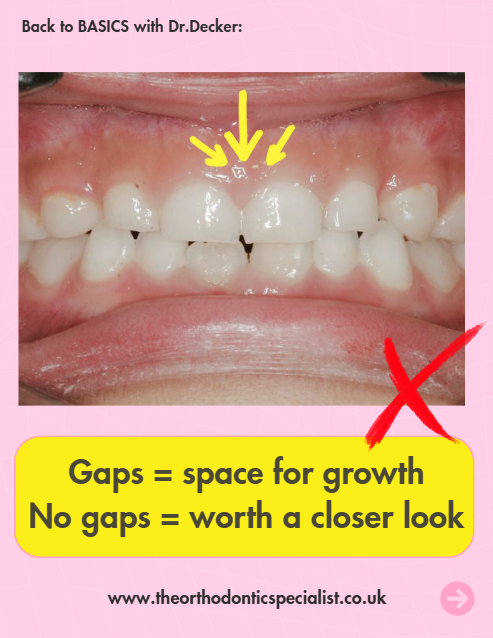
Why "no gaps" in a child's baby teeth can be a warning sign
Most parents think gaps between baby teeth are a problem. In fact, the opposite is true. Here's what crowded baby teeth really tell us about your child's jaw development.
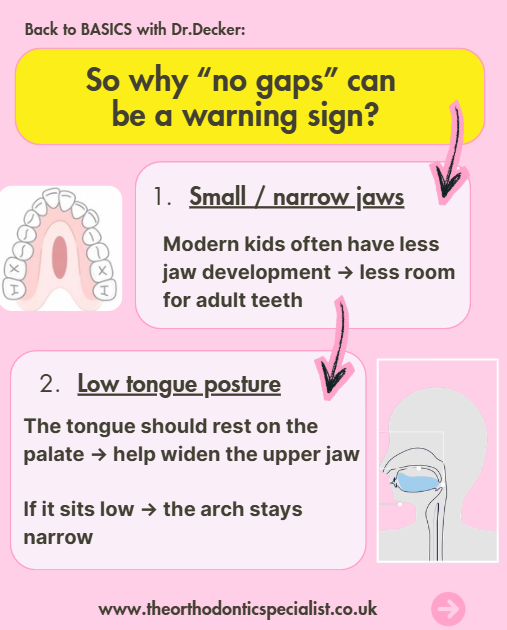
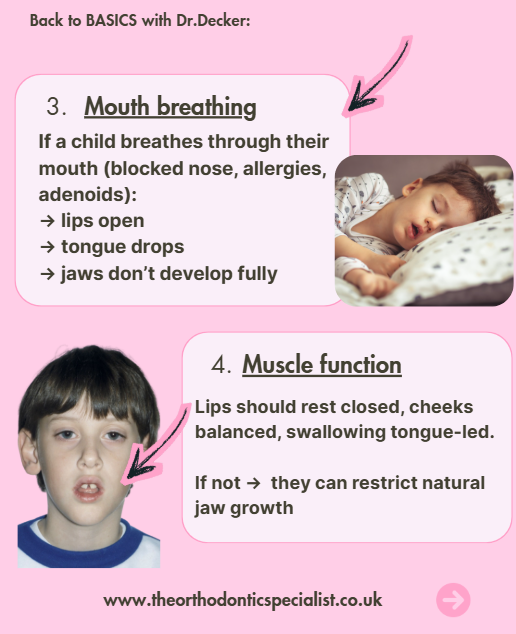
Small / Narrow Jaws
Modern children often have less jaw development, leaving less room for adult teeth to erupt.
Low Tongue Posture
The tongue should rest on the palate to help widen the upper jaw. If it sits low, the arch stays narrow.
Mouth Breathing
Blocked nose, allergies or adenoids cause lips to part, tongue to drop, and jaws to stop developing fully.
Muscle Function
Lips should rest closed, cheeks balanced, swallowing tongue-led. Without this, muscles restrict natural jaw growth.
"Gaps = space for growth. No gaps = worth a closer look."
- Dr. Steffen Decker, The Orthodontic Specialist
By age 2, over half of jaw growth has happened.
By age 12, it's nearly complete.
Once the window closes, crowding and narrow jaws become harder to correct. That's why we focus on influencing craniofacial growth while they are still growing.
The issue isn't the teeth—it's the space they grow into.
Most orthodontic care starts after jaw growth is mostly done, so treatment often fits teeth into a small space instead of creating the right space first.
Retainers are often lifelong
Braces move teeth into place—but without creating space, they often shift back due to relapse.
Healthy teeth removed
Traditional orthodontics often extracts healthy premolars to "make room" in a narrow jaw.
Straight teeth ≠ healthy smile
Straight teeth alone don't guarantee healthy breathing, proper jaw function, or optimal facial development.
Good function is the best retainer.
Our goal is to create natural stability. Proper tongue positioning, a good lip seal, and healthy nasal breathing are the best ways to keep teeth straight naturally. When these functions are achieved through myofunctional therapy, the chance of relapse is significantly reduced.
But who wears a retainer their whole life?
We still provide retainers at the end of treatment, but our approach is different. We prefer passive aligners that allow for slight natural movement and growth over time, or traditional Hawley retainers. Depending on your individual needs, we may also use Essix, Vivera, or fixed retainers.
While we set you up for long-term success, the ultimate responsibility for the retention phase—and wearing the retainers—rests with the patient.

Where traditional orthodontics falls short.
Families are often told to "wait and see," then get braces and possible extractions later - after the growth window has closed.
Our growth-guided care aims to create space first, then align teeth. By intervening early, we guide natural jaw development, expand the palate, and create the necessary space for adult teeth. This proactive approach dramatically reduces the likelihood of extractions and complex interventions later in life.
- ✓ Improved breathing space
- ✓ Better sleep and reduced snoring
- ✓ Facial balance and forward growth
- ✓ Natural tooth alignment with enough room
Our craniofacial growth approach
We work with your child's natural growth - not against it. Our approach focuses on influencing the underlying jaw structure during the critical development window.
First assessment
We assess tongue posture, lip seal, breathing habits and early jaw development. Many issues can be identified and addressed well before the first adult tooth erupts.
Early arch development
Using functional appliances, myofunctional therapy and habit guidance, we work to widen the arch, support nasal breathing and create space for incoming adult teeth.
Growth guidance & monitoring
We track jaw growth using AI-supported remote monitoring via DentalMonitoring. Adjustments are made as needed so we stay ahead of crowding before it develops.
Alignment - with space already created
By the time your child reaches the braces or aligner stage, the hard work is done. Teeth align into a jaw that already has room - no extractions required.
Retention - driven by function
Good function is the best retainer. With proper tongue posture, lip seal, and nasal breathing, we minimize relapse. While we provide retainers, natural stability is the ultimate goal.
Signs your child may benefit from early guidance
These are not diagnoses - but they are reasons to seek an early specialist assessment.