Children's Orthodontist in Amersham: Early Screening from Age 4
The right treatment at the right time. For children from age 4, early guidance and prevention can positively influence how the jaws, facial growth, and breathing function develop - sometimes preventing the need for more complex treatment later. We focus on airway awareness, proper tongue posture, and guiding natural development.
Our children's care is expertly delivered by our dedicated clinicians, Dr Nathalie Taubecegarra and Dr Ayah El Hamalawy, under the clinical leadership of Dr Steffen Decker.
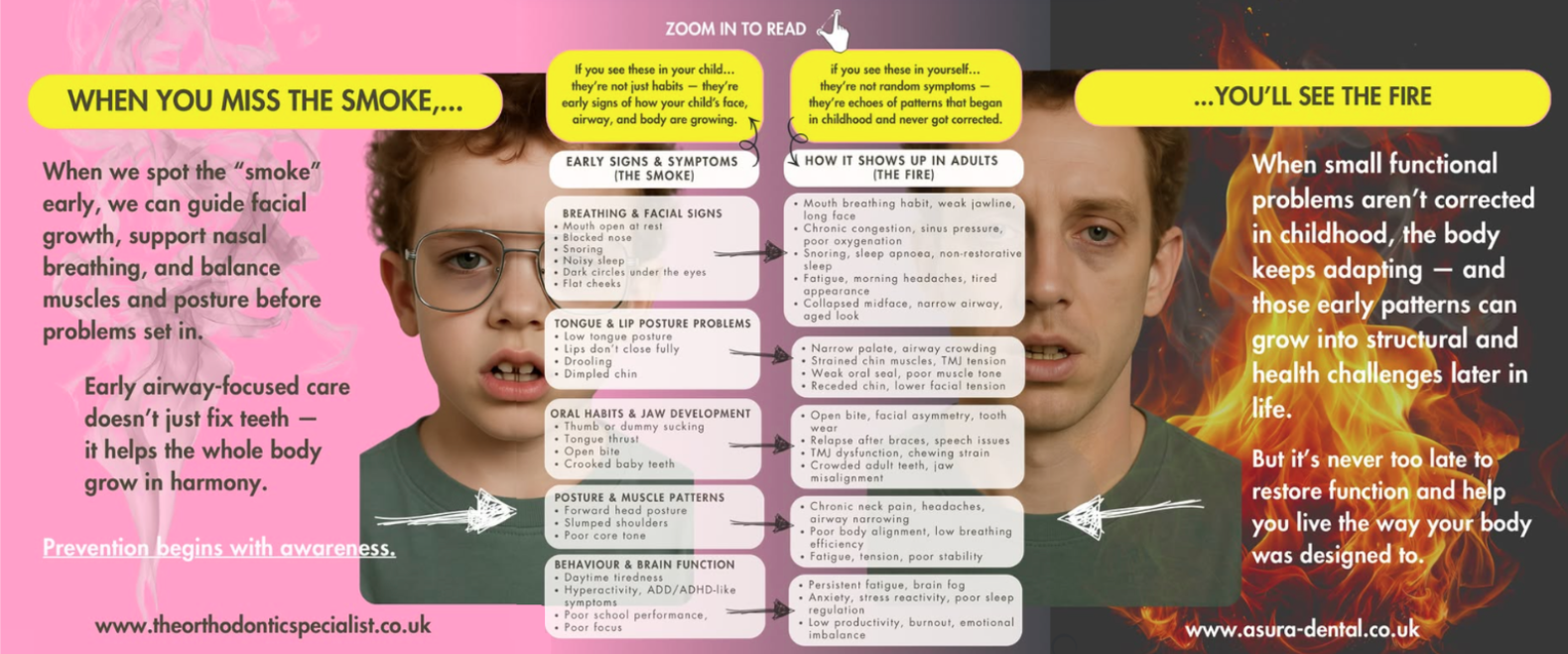
If You Miss the Smoke, You Will Treat the Fire
Early signs of adaptation are often the body's way of telling us something is wrong.
At The Orthodontic Specialist, we believe many orthodontic and airway problems do not happen overnight.
Long before severe crowding, jaw discrepancies, breathing problems, or complex treatment needs develop, the body often shows subtle warning signs — the "smoke."
Children adapt remarkably well. A mouth breathing child may be adapting to a restricted airway. A child with poor tongue posture may develop a narrow palate. Poor sleep may appear as behavioural concerns, poor concentration, or signs of paediatric sleep-disordered breathing.
These are often not isolated problems — they may be early indicators that craniofacial development is adapting to functional challenges.
Traditional approaches may adopt a "wait and see" mindset. Our philosophy for early orthodontic intervention is different.
We believe in identifying opportunities early through a comprehensive child airway assessment and facial growth assessment. By screening for these adaptive patterns early, our airway orthodontics and early orthodontic treatment can be simpler, gentler, and focused on true orthodontic prevention.
Because when we recognise the smoke, we may help prevent the fire.
Why We Screen from Age 4
We screen and see children from age 4, not 7. The earlier we can observe how the jaws, bite and airway are developing, the more growth remains available to guide. This is not because most children need treatment at this age — they do not — but because it gives us a baseline to monitor development while there is still significant growth ahead.
Even before the first adult molars and front incisors come through, we can identify several important patterns: a crossbite that may shift the jaw, a crowding tendency, or signs of mouth breathing that may be influencing facial growth. Recognising these early signs allows us to plan ahead rather than react later.
Crucially, the upper jaw (maxilla) completes most of its growth during childhood. The earlier we identify a developing problem, the more growth remains available to guide. Waiting until all the adult teeth are through can close off simpler, gentler options that are only possible while the skeleton is still developing.
Early screening from age 4 is possible provided the child is able to cooperate and we can take the full clinical records we need, including X-rays, photographs and intra-oral scans, so that an appliance can be manufactured. If a child is not yet ready for these records, we will simply monitor and reassess at the right time.
What an Early Assessment Involves
A first assessment is calm, thorough and unhurried. We take time to understand your child's history, your concerns and what you have noticed at home. We then carry out a gentle clinical examination of the teeth, bite, jaws and facial development.
Where clinically appropriate, and provided your child is comfortable and able to cooperate, we may take digital scans, photographs and X-rays to build a complete picture. We also look at breathing, tongue posture and lip seal, because these everyday functions influence how the face and jaws develop over time. Everything is explained to you and your child in plain, age-appropriate language.
At the end of the assessment, we will give you an honest, clear recommendation: whether treatment is advisable now, whether monitoring is the better choice, or simply reassurance that everything is developing well. There is never any pressure to start treatment.
Early Treatment Options We Use
We tailor every treatment plan to the child's age, growth stage and individual needs. Not every child needs treatment - but when they do, we have the right tools.
Smartee AG Clear Aligners
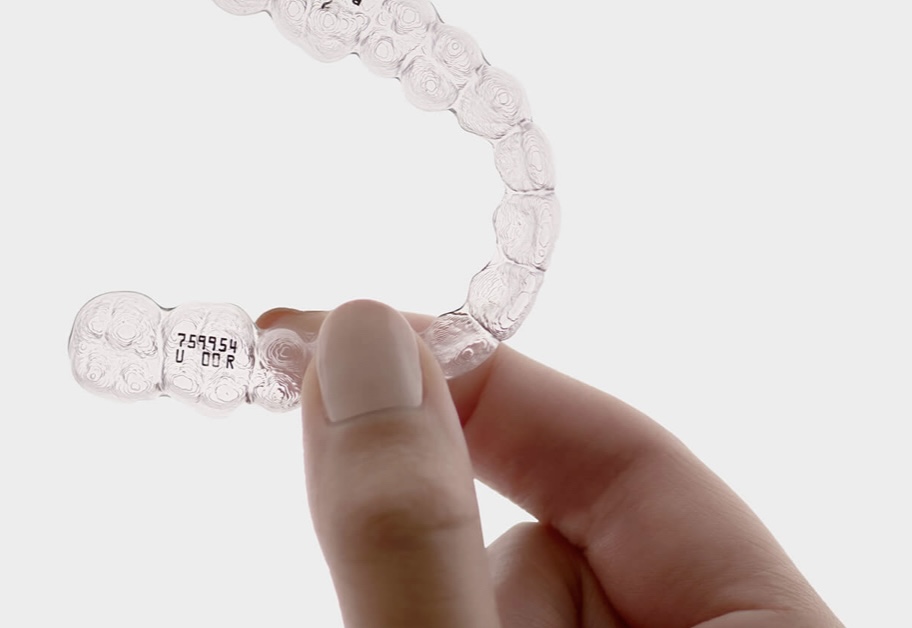
Virtually invisible, removable aligners that gently guide teeth and jaw development. Smartee AG (Airway and Growth) aligners are designed specifically for growing children, with functional features like tongue guides and habit breakers built directly into the aligner design - ideal for children who need gentle growth guidance, airway awareness, and support for proper tongue posture alongside tooth alignment.
- ✓ Removable for eating and brushing
- ✓ Comfortable and discreet
- ✓ Can include tongue guides & habit breakers
- ! Requires compliance to wear daily
Palate Expanders (RME)
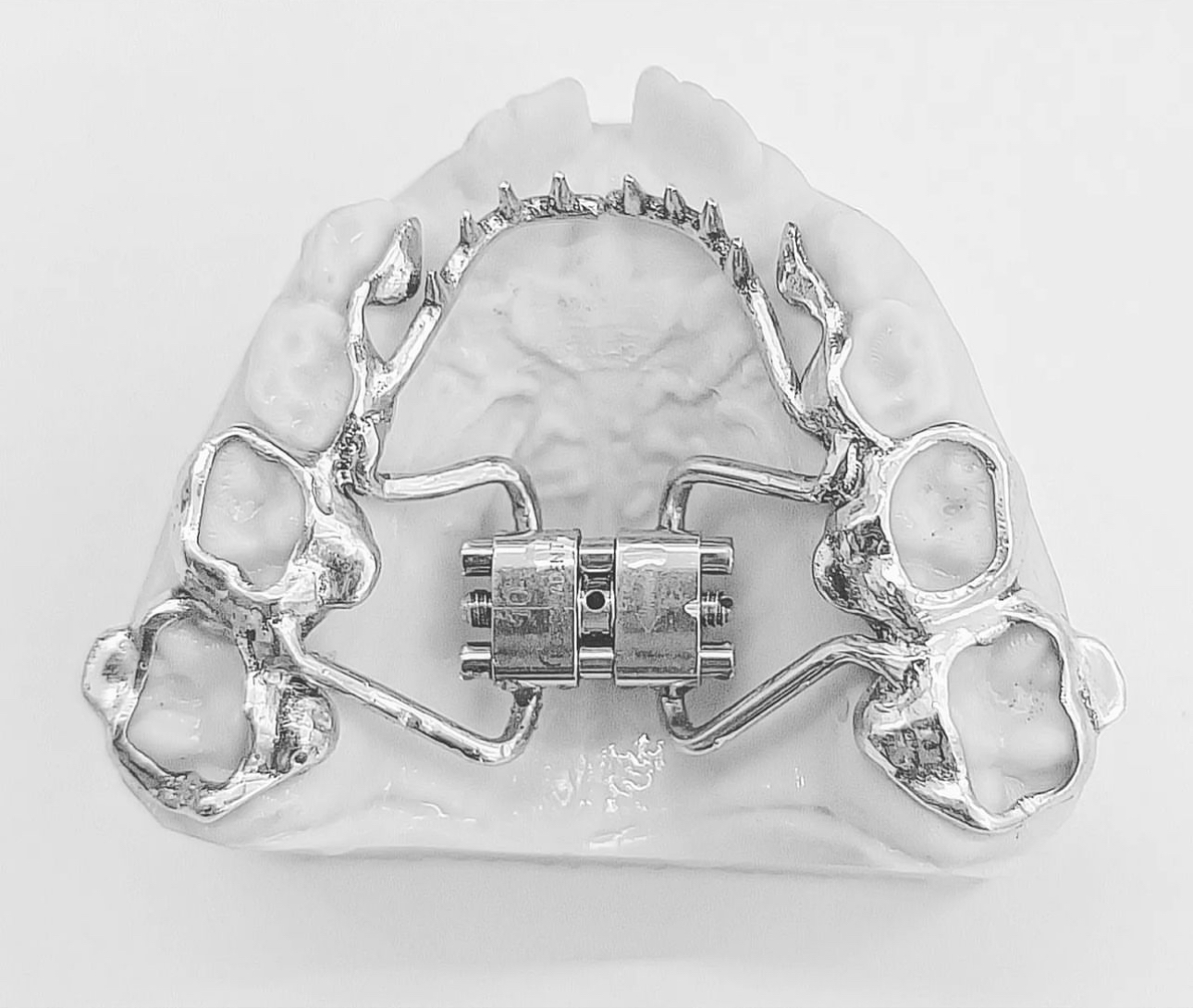
For children under 11, a tooth-borne Rapid Maxillary Expander (RME) can widen a narrow upper jaw during a critical growth window. Palatal expansion creates more space for adult teeth, supports proper tongue posture, improves nasal breathing, and reduces the need for extractions later. Early expansion is a key part of our prevention strategy and is most effective before the mid-palatal suture begins to fuse.
- ✓ Creates space without extractions
- ✓ Improves nasal breathing
- ✓ Most effective ages 5–10
- ! Fixed appliance - worn continuously
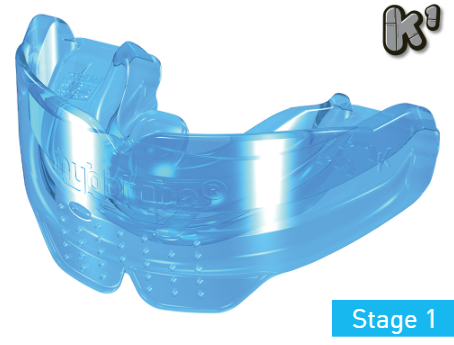
Oral Appliances & Myofunctional Therapy
Functional oral appliances such as Myobrace® and Froggy Mouth® are used alongside myofunctional therapy to support proper tongue posture, lip seal, nasal breathing, and muscle function during facial growth. These are not standalone treatments but are carefully integrated into a personalised care plan as an adjunct to clear aligners or growth guidance to address mouth breathing and airway awareness. We also utilise the Tongue Teacher app to support families at home.
- ✓ Supports tongue posture and lip seal
- ✓ Encourages nasal breathing habits
- ✓ Used alongside myofunctional therapy
- ! Requires daily commitment and exercises
Signs your child may benefit from an early assessment
Crossbite
Front or side crossbites affecting jaw growth and bite balance
Crowded teeth
Not enough - or too much - space for adult teeth to erupt
Open bite or deep bite
Teeth that don't meet properly, or bite traumatically
Mouth breathing
Breathing through the mouth during the day or night
Child snoring & sleep concerns
Snoring, restless sleep, grinding or signs of disturbed breathing
Tongue tie or poor tongue posture
Affecting swallowing, speech, breathing and jaw development
Prominent front teeth
Increased risk of dental trauma or fractures
Underbite tendency
Class III growth pattern that may benefit from early guidance
Peg laterals and weak enamel? Bonding at ASURA
Small or peg-shaped upper lateral incisors and hypoplastic or MIH-affected front teeth are often built up with tooth-coloured composite bonding to restore their shape and appearance. This is usually timed with orthodontic treatment so the space is planned correctly, and the final shaping is carried out once the teeth are in position. This bonding is not provided at The Orthodontic Specialist; it is carried out next door at our sister practice ASURA Longevity Dentistry by dental hygiene therapist Louise Bierrum (GDC 274859), from £300 per tooth.
What Happens If We Recommend Waiting
For many children, the right recommendation is simply to monitor growth and review periodically. This is not a "do nothing" approach — it is an active decision based on the stage of development. Some problems are best left until more growth has occurred, and intervening too early can sometimes mean longer or more complex treatment than necessary.
If we recommend waiting, we will explain exactly what we are monitoring, when we would like to see your child again, and what signs to watch for at home. We will only suggest starting treatment when there is a clear clinical reason to do so. Our philosophy is the right treatment at the right time — never treatment for its own sake.
Our philosophy for children's treatment
We do not treat every child early - only the right child at the right time. A growth and breathing assessment from age 4 helps us understand whether monitoring, early intervention or simply reassurance is the right approach for your child.
A Day at The Orthodontic Specialist
Wondering what to expect? Take a look inside our Amersham clinic and see how we make every visit a comfortable, welcoming experience for you and your child.
What Does the Research Say?
Evidence-Based Early Interceptive Orthodontics
Research in dentofacial orthopaedics consistently demonstrates that modifying jaw growth is most effective before the pubertal growth spurt. Clinical studies show that early correction of crossbites and narrow maxillae can prevent asymmetrical jaw growth, increase nasal airway dimensions, and reduce the likelihood of requiring extractions or orthognathic surgery in the future.
Key Findings
- Early expansion reduces nasal airway resistance.
- Intervening early can prevent severe dental impactions.
- Addressing oral habits (like thumb sucking) allows for spontaneous bite correction.
Clinical Relevance
- Early screening from age 4 provides the best baseline for growth monitoring.
- Myofunctional therapy improves the stability of orthodontic outcomes.
- Not all children need early treatment; selective intervention is key.
Combined AI and in-person myofunctional therapy
Our myofunctional programmes are available exclusively to patients currently undergoing orthodontic treatment at The Orthodontic Specialist. We offer three levels of support: a therapist-led programme (£3,000), a hybrid therapist plus Tongue Teacher app programme (£1,500), and a self-directed Tongue Teacher app programme (£500). The most suitable option depends on your child's individual needs and the level of support required.
Therapist appointments may take place at the practice, over Zoom or through a combination agreed with your therapist. The Tongue Teacher app itself does not provide feedback or check exercise technique. You can read more on our myofunctional therapy page or see the full programme details on our pricing page.
Frequently Asked Questions
Diagnostic Suitability & Additional Needs
We are very experienced in seeing children with different levels of cooperation, sensory sensitivity, anxiety, ADHD, autism and communication differences, and we will always try to approach this with patience and kindness.
However, for orthodontic treatment to be planned safely, we do need to be able to complete the essential diagnostic records. This usually includes an orthodontic examination, clinical photographs, digital scans and, where clinically necessary, X-rays. These records allow the orthodontist to assess the teeth, bite, jaw development, growth pattern and airway-related factors before giving any treatment recommendation.
If a child is not currently able to sit in the chair, open their mouth, tolerate photographs, scans or X-rays, or cooperate safely with an appliance, then we may not be able to complete a full orthodontic assessment or provide a treatment plan at that stage.
In that situation, we may recommend a gentle introductory visit first, or suggest that further preparation, desensitisation, support from the child's medical or behavioural team, or assessment in a more specialist setting may be required before orthodontic diagnostics can be completed.
The Lifelong Dental Health Journey
Explore our interconnected ecosystem of prevention, diagnosis, treatment, rehabilitation, and education.
Childhood
"Prevent problems before they become lifelong conditions."
Guiding facial growth and addressing airway issues early to prevent lifelong conditions.
Key Focus Areas:
GrowIQ Dental Academy
Our educational backbone. Teaching clinicians how to deliver predictable, evidence-based care across the entire lifespan of dentistry. From student to faculty and future research innovation.